December 29, 2025
The braking system is arguably the most critical safety feature of any modern vehicle, serving as the primary line of defense against road hazards and potential collisions. Ensuring that this system operates at peak efficiency is not just a matter of performance but a fundamental necessity for the safety of the driver, passengers, and others on the road. Over time, the various components of the braking assembly, including pads, rotors, and hydraulic lines, inevitably experience wear and tear due to friction and heat. Recognizing the early warning signs of degradation can prevent a minor mechanical issue from escalating into a dangerous failure. This guide outlines the most frequent indicators that your vehicle requires professional intervention to maintain its stopping power and structural integrity.
High-Pitched Squealing or Screeching Noises
One of the most common ways a vehicle communicates the need for maintenance is through audible cues. Many brake pads are designed with a small metal shim known as a wear indicator, which emits a high-pitched squealing sound when the pad material has worn down to a specific level. This sound is a deliberate warning to the driver that the friction material is nearing the end of its functional life. When you hear this noise consistently during a commute, it is time to visit an auto repair facility to have the thickness of the pads measured. Ignoring this sound can lead to the complete depletion of the pad material, eventually causing damage to more expensive components like the rotors.
Metal-on-Metal Grinding Sounds
If the initial squealing noise is ignored, it often transitions into a harsh grinding sound that resembles metal rubbing against metal. This indicates that the brake pads have been completely worn away, leaving the metal backing plate to press directly against the iron rotor. This situation is an emergency that requires immediate professional attention from an auto repair expert. Not only does this metal-on-metal contact significantly reduce your ability to stop the vehicle, but it also creates excessive heat that can warp or score the rotors beyond repair. Once this stage is reached, the cost of the restoration increases substantially as more parts must be replaced to ensure safety.
Vibrations or Pulsing in the Pedal
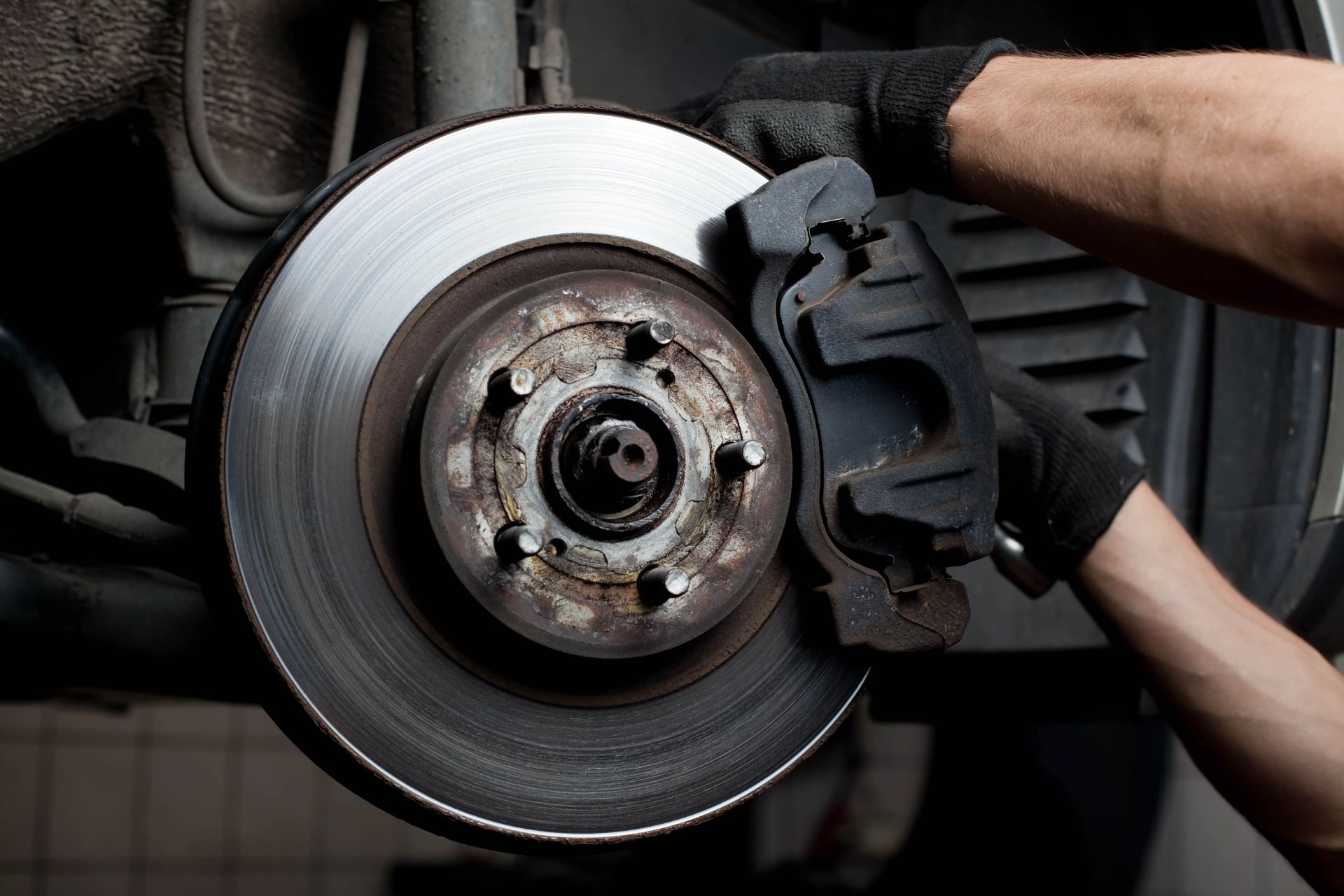
When you apply pressure to the brake pedal and feel a steady vibration or a pulsing sensation, it often points to a problem with the rotors. Rotors are the circular discs that the pads clamp onto to stop the wheels; for smooth operation, they must be perfectly flat and even. Over thousands of miles, the heat generated during stops can cause the metal to warp or develop "hot spots." Professional auto repair technicians use precise instruments to check the "runout" or flatness of these discs. If the rotors are uneven, the pads cannot make consistent contact, which leads to the shuddering sensation you feel through your foot. Replacing or resurfacing these components is necessary to restore a smooth and predictable stopping experience.
Vehicle Pulling to One Side
A vehicle that drifts or pulls to one side while braking is a sign of an imbalance in the braking system. This can be caused by a variety of issues, such as a frozen brake caliper, a collapsed brake hose, or unevenly worn pads. When one side of the vehicle is applying more force than the other, it creates an asymmetrical drag that tugs the steering wheel. This is a complex mechanical issue that necessitates a thorough diagnostic at an auto repair shop. Driving a vehicle that pulls under pressure is dangerous, as it can cause the driver to lose control during a sudden stop or accidentally drift into an adjacent lane of traffic.
Soft or Spongy Brake Pedal
The feeling of the brake pedal under your foot should be firm and consistent. If you notice that the pedal feels "soft" or "spongy," or if it sinks all the way to the floorboard before the vehicle begins to slow down, there is likely an issue within the hydraulic system. This often indicates the presence of air or moisture in the brake fluid lines or a potential leak in the master cylinder. Because braking systems rely on incompressible fluid to transfer force, any air in the system will compromise the pressure. An auto repair professional will need to bleed the lines or inspect for leaks to ensure that the hydraulic pressure is maintained at the levels required for safe operation.
Brake Pad Thinning
Visual inspections can sometimes provide the clearest evidence of wear. Many modern vehicles allow a glimpse of the brake pads through the spokes of the wheels. Observing the thickness of the remaining material can help you stay ahead of total failure. According to AAA, if your pads are less than an eighth of an inch thick, they should be replaced. This threshold is considered the minimum safe limit for maintaining effective friction. When you visit a shop for an auto repair estimate, the technician will use a gauge to provide an exact measurement.
Appearance of Warning Lights
Dashboard warning lights are the vehicle’s internal diagnostic system alerting you to a malfunction. The "Brake" light or the Anti-lock Braking System (ABS) light may illuminate for several reasons, including low fluid levels, sensor malfunctions, or a loss of pressure. These lights are not suggestions; they are critical alerts that require an immediate diagnostic scan. A qualified auto repair team can plug into the vehicle's onboard computer to retrieve specific error codes. Addressing these alerts promptly can prevent a total system shutdown, ensuring that safety features like electronic brake force distribution and traction control remain functional when you need them most.
Unusual Smells After Driving
A sharp, chemical odor resembling burning carpet after heavy braking is a sign of overheated components. While this can happen after descending a long, steep hill, a persistent burning smell during normal driving conditions is a major red flag. This often points to a "stuck" caliper that is keeping the brake pad pressed against the rotor even when your foot is off the pedal. This constant friction generates extreme heat that can boil the brake fluid and lead to a total loss of stopping power, known as brake fade. If you smell burning, pull over safely and seek a professional auto repair assessment to prevent a potential vehicle fire or total brake failure.
Changes in Stopping Distance
If you find yourself needing to press the pedal earlier or harder than usual to come to a complete stop, your system is losing its effectiveness. This gradual decrease in performance can be hard to notice at first, but it is a primary indicator of worn friction material or aging fluid. Brake fluid is hygroscopic, meaning it absorbs moisture over time, which lowers its boiling point and reduces its effectiveness. An auto repair technician can test the moisture content of your fluid and perform a flush if necessary. Restoring the responsiveness of the system ensures that the vehicle can handle emergency stopping situations without requiring excessive distance.
Professional Maintenance Importance
While modern vehicles are built to be durable, the sheer force and heat involved in stopping a multi-ton machine mean that components will always be subject to wear. Entrusting your vehicle to a reputable auto repair facility ensures that every part of the assembly, from the mounting hardware to the electronic sensors, is inspected for integrity. Technicians use professional-grade lubricants and high-quality replacement parts that meet the specific weight and performance requirements of your make and model.
Understanding the signs of brake wear is an essential skill for every responsible driver. From the subtle vibration in the steering wheel to the unmistakable sound of metal grinding, your vehicle provides numerous warnings before a total failure occurs. Prioritizing these repairs not only extends the life of your vehicle but also ensures that you have the necessary control during critical driving moments. Keep your vehicle stopping on a dime with the professional care of Precision Performance. Whether you hear a squeal or feel a pulse, our team is ready to provide a comprehensive inspection and get you back on the road safely. Would you like me to schedule a brake system evaluation for you today?